67%
Reported feeling mentally overloaded.
 Join the waitlist
FOR EMPLOYERS
Work can bring purpose, connection and room for ambition. But worries, exhaustion and the mental demands of motherhood don't disappear when the working day starts. How can you support mothers with the things they may not want to discuss with their manager?
Madae is building personal mental wellbeing support for mothers. We're looking for employers who want to help shape that support around the needs of working mothers.
Discuss a design partnership →THE NEED
Parental leave, flexibility and a supportive manager make a difference. But not everything a mother is dealing with belongs in a workplace conversation.
Why do I feel guilty when I'm at work? Why am I suddenly doubting myself? How do I ask for what I need without having my ambition questioned?
For employers, the challenge is to offer meaningful support without asking employees to disclose what they'd rather keep private.
Research among 9,600 mothers across 11 EU countries and the UK found:
67%
Reported feeling mentally overloaded.
27%
Said motherhood had negatively affected their career.
Only35%
Reported benefiting from a gradual return to work.
Source: Make Mothers Matter / Kantar, State of Motherhood in Europe 2024. Self-reported experiences from mothers with children of different ages.
MEET MADAE
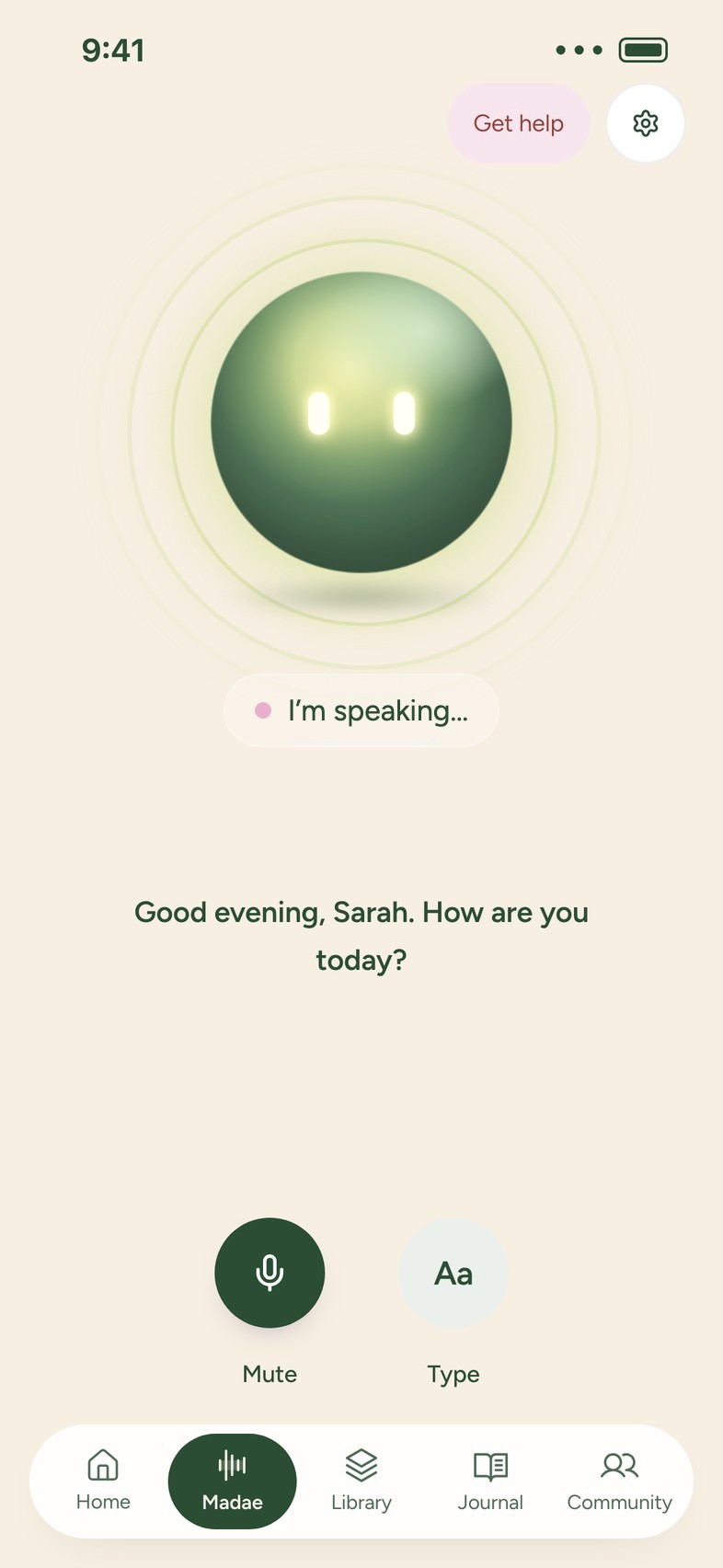
Madae is a specialised AI companion for mothers' mental wellbeing during the first four years after birth.
Mothers can talk by voice or text, explore guided psychological self-help and connect with other mothers in the app.
With her permission, Madae can draw on relevant context from conversations, check-ins and journaling to make support more personal. Optional Apple Health and Android Health Connect integrations will also allow mothers to explore how sleep and menstrual cycle information may relate to their wellbeing.
Diagram: conversations, check-ins and journaling come together in personal context, which tailors conversations and psychological self-help. Sleep and cycle data from Apple Health and Health Connect are a planned addition, only with her permission; this connection is not active yet. Personal context and health data are not shared with the employer.
Her conversations, journal and personal health information are never shared with her employer through Madae.
Madae draws on research into maternal mental wellbeing and established psychological approaches to self-help and reflection.
This knowledge informs our conversations and exercises. Professional review and evaluation with mothers will help us understand what is useful, what needs to improve and where the technology has limitations.
Evidence for a psychological method is not evidence that Madae itself is effective. The product's safety, usefulness and effects must be evaluated separately.
DESIGN PARTNERSHIP
As a design partner, you'll work with Madae to explore how mental wellbeing support can fit the realities of working mothers and the support your organisation already provides. A design partnership begins with discovery. It doesn't commit you to buying the app or launching a pilot.
HOW WE COLLABORATE
Explore what's needed and what's missing, together with HR and mothers who choose to participate.
Turn those insights into improvements to Madae and practical guidance for the organisation.
Agree on objectives, participation and evaluation, and decide whether a pilot is the right next step.
A product pilot will only begin after the necessary professional, safety and privacy reviews.
We start with an exploratory conversation. Together, we'll decide whether a design partnership makes sense and what it would involve.
ETHICAL BY DESIGN
Offering personal mental wellbeing support through work requires clear boundaries. Privacy, autonomy and psychological safety shape both Madae and the way we work with employers.
Mothers decide whether to use Madae, what to share and whether the support suits them.
Employers do not receive access to individual conversations, journal entries, mental wellbeing check-ins or health data, even when they fund access.
Madae is designed to help mothers explore different perspectives and make their own choices, rather than tell them what to do.
No pressure to keep talking or return. Madae is designed to support independence, human relationships and access to appropriate care.
Madae is AI, not a person or a therapist. We are transparent about its capabilities, limitations and the possibility of mistakes.
ALONGSIDE CARE
Madae supports everyday mental wellbeing. It does not replace professional healthcare, good working conditions, flexible workplace arrangements or an employer's responsibilities. Madae does not diagnose or treat mental health conditions.
OUR FOCUS
Madae's initial focus is mothers in the first four years after birth, with the ambition to continue supporting them as their children grow.
We're developing Madae in English and Dutch, and we welcome international design partners. Together, we can explore which additional languages would be needed.
GET IN TOUCH
Want to offer better mental wellbeing support to mothers at work, while respecting their privacy and independence? Let's discuss the challenges your organisation sees, what mothers may need and whether a design partnership could be valuable for both sides.